









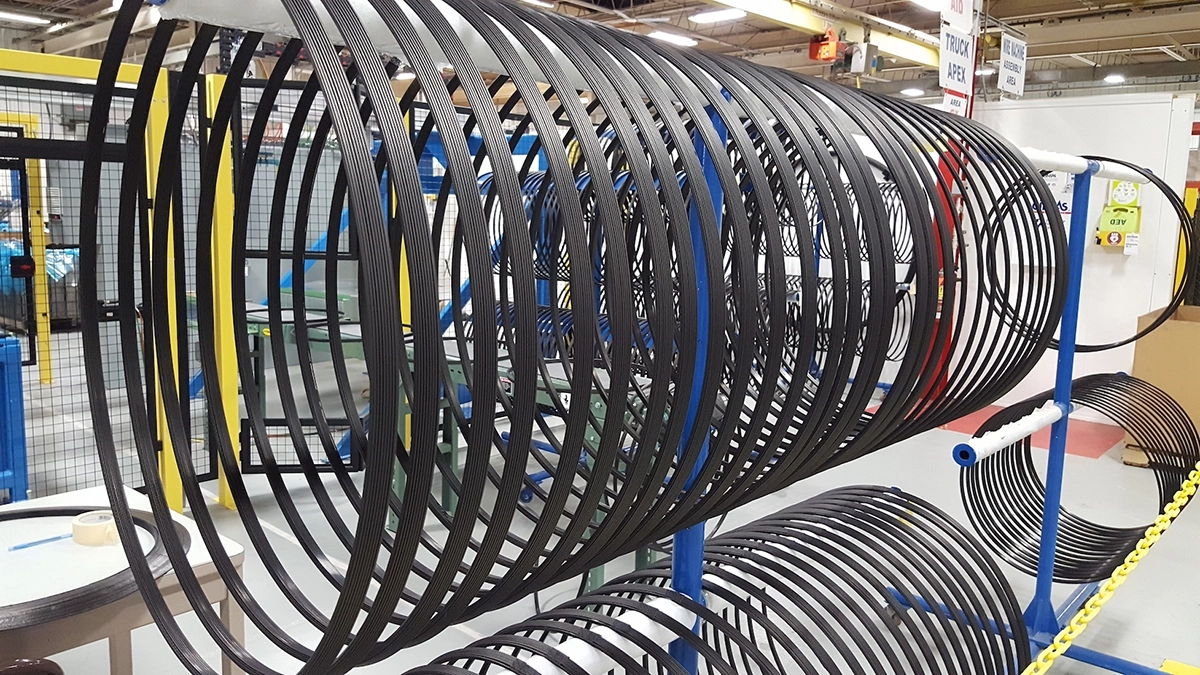
Production volume is not the only determining factor for gaining a foothold over competitors. Manufacturers are under increasing pressure to improve quality, reduce scrap, increase throughput, and adapt to rapidly evolving tire designs, all while managing labor shortages and rising operational costs.
Tire construction is becoming more sophisticated. Manufacturers are discovering that one of the most critical opportunities for improving efficiency and product performance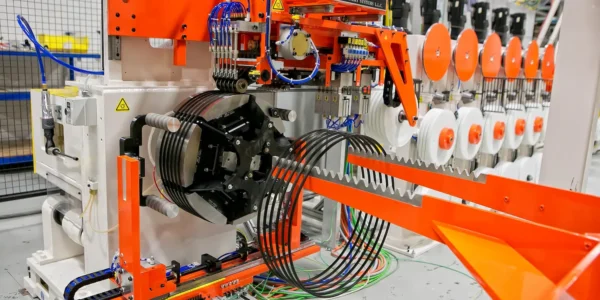 lies in a process that has historically received less attention than tread components or tire building technologies: bead winding.
The tire bead is the foundation of the tire structure. It secures the tire to the wheel, maintains dimensional stability, and plays a critical role in load transfer, handling characteristics, and long-term durability. Due to its heightened importance, even small variations in bead quality can have significant consequences throughout the manufacturing process and the tire’s service life.
As a result, precision bead winding is increasingly becoming a strategic differentiator for tire manufacturing to improve quality, reduce costs, and stay competitive in a rapidly changing market.
The Hidden Impact of the Tire Bead
Although it’s hidden within the finished tire, the bead is one of the most structurally important components in tire construction. Manufactured from high-strength steel wire wound into a precise circular geometry, the bead creates the interface between the tire and wheel assembly.
This wire needs to maintain its shape and structural integrity under demanding circumstances, including inflation pressure, vehicle loads, dynamic cornering forces, temperature fluctuations, and long-term fatigue cycles.
If the bead isn’t manufactured consistently, the resulting variations can affect downstream tire building processes and ultimately impact finished tire performance. Because of this significant role, it can be argued that the tire’s quality begins with the bead.
Why Precision Matters More Than Ever
Historically, manufacturers could tolerate certain levels of variation within the bead winding process. Modern tire designs, however, are far less forgiving.
Today’s tires are engineered with increasingly demanding performance requirements. They need to exhibit lower rolling resistance, improved fuel efficiency, higher load capacities, and greater dimensional consistency.
To achieve these goals, every component within the tire must be manufactured with exceptional precision.
Bead Geometry:
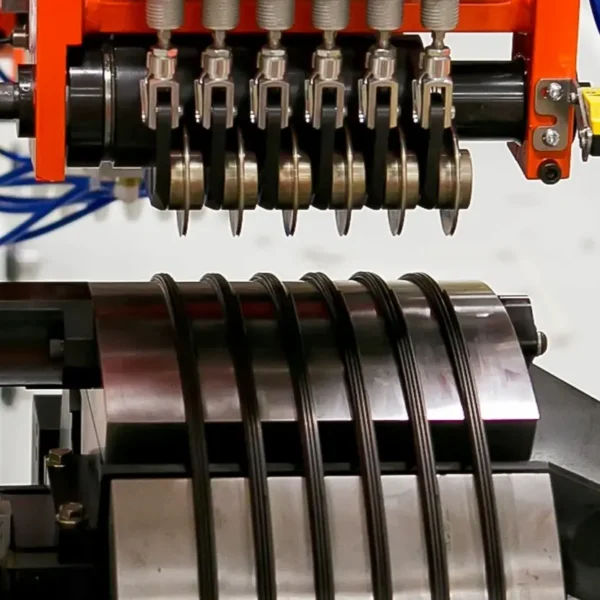
The bead must maintain exact dimensional tolerances for proper seating on the rim and consistent tire building performance. Any variations in diameter, roundness, or profile can create assembly challenges and lead to downstream quality issues.
Wire Tension:
Consistent tension throughout the winding process is essential for uniform bead stiffness and structural integrity. Any inconsistencies can lead to irregular winding density, uneven load distribution, and reduced fatigue performance.
Apex Application:
The apex applied around the bead assembly influences sidewall stiffness and overall tire performance. Poor bead consistency can complicate apex application and lead to variations in final tire geometry.
The Cost of Inconsistency
Many manufacturers focus on scrap generated at later stages of tire production. However, issues originating in the bead winding process often create hidden costs throughout the factory.
Inconsistencies contribute to increased scrap buildup, additional inspection requirements, frequent rework and correction activities, and reduced production throughput. Because bead issues often manifest later in the manufacturing process, the true cost of poor bead quality is frequently underestimated.
Therefore, improving bead winding precision has a cascading positive effect across the entire production operation.
Automation is Raising the Bar
Modern tire manufacturing facilities are increasingly turning to automation to improve consistency and reduce dependence on manual processes.
Obviously, bead winding is no exception.
Advanced bead winding systems now incorporate sophisticated automation technologies that help eliminate variability and improve process control.
Closed-Loop Tension Control:
Modern systems continuously monitor wire tension throughout the process and automatically adjust operating parameters to maintain consistency. This is ideal for repeatable bead quality regardless of changes in speed, material characteristics, or production conditions.
Servo-Driven Forming Systems:
These provide highly precise control over bead geometry and forming operations. Compared to traditional systems, this technology offers improved dimensional accuracy, faster setup changes, and enhanced repeatability.
Recipe-Based Production:
Digital recipe management allows operators to store and recall production settings for different tire programs. This reduces setup time, minimizes operator error, and supports faster changeovers between products.
The Role of Inspection and Quality Monitoring
Quality is not an after-the-fact activity.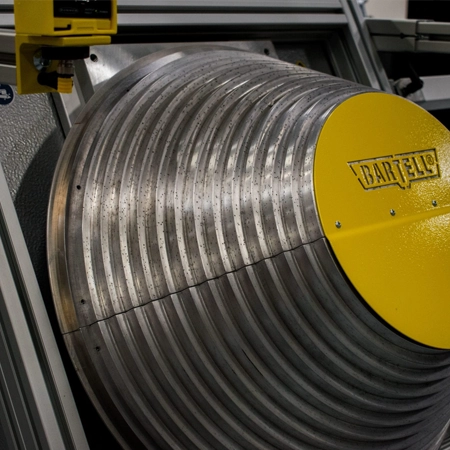 Leading tire manufacturers increasingly rely on integrated inspection systems that verify bead quality in real time.
Advanced inspection capabilities include diameter measurement, geometry verification, roundness inspection, wire placement monitoring, and process parameter tracking. By identifying deviations immediately, manufacturers can address issues before they impact downstream production.
This approach reduces wastes, improves traceability, and supports continuous process improvement initiatives. For high-volume operations, real-time quality monitoring has become a critical component of competitive manufacturing.
Integrated Handling: Eliminating Bottlenecks
Another area where modern bead winding systems create value is through integrated handling and automation. Historically, manually handling finished beads could lead to damage, misalignment, and production delays, along with additional labor requirements.
Modern systems increasingly incorporate automated unloading, transfer, and material handling capabilities. These solutions reduce labor dependency, improve throughput, and minimize handling-related defects.
As labor markets become more challenging, these capabilities provide significant operational advantages.
Supporting High-Volume Production Without Sacrificing Quality
Global tire demand keeps growing, placing pressure on manufacturers to increase output while still maintaining strict quality standards. The challenge is that the higher the production volume is, the greater opportunities exist for process variation.
Advanced bead winding systems address this challenge by combining high-speed production capability and automated process control with precision forming technology and integrated quality monitoring.
This combination helps manufacturers to scale production without sacrificing consistency. For facilities producing millions of tires annually, even small improvements in bead quality can translate into substantial gains in productivity and profitability.
EV Tires Are Changing the Rules
Electric vehicles are hitting the markets, which leads to new challenges for tire manufacturers. Similar to standard tires, EV tires have to withstand higher torque loads, increased vehicle weight, unique wear characteristics, and stricter noise requirements.
These factors place additional demands on tire construction and component consistency.
Because the bead plays a key role in maintaining structural integrity and vehicle handling characteristics, precision bead manufacturing becomes even more important in EV applications.
Manufacturers serving the EV market increasingly require bead winding systems capable of achieving tighter tolerances and greater repeatability than ever before.
Addressing Labor Shortage Through Technology
Labor availability remains a significant concern throughout the manufacturing sector. Experienced operators are becoming harder to find, while production demands continue to increase.
Advanced bead winding systems help address this challenge through automation, simplified operation, reduced setup complexity, and automated inspection. These capabilities reduce reliance on specialized operator expertise while improving overall process consistency.
As workforce challenges persist, automation-driven bead winding solutions will continue to play a growing role in modern tire plants.
Why Precision Bead Winding is a Strategic Investment
As competition grows, companies are increasingly looking beyond individual machine performance and focusing on overall operational efficiency. Precision bead winding contributes directly to several key business objectives.
These include lower scrap rates and higher throughput with reduced labor dependency and improved tire uniformity. It also leads to faster product changeovers, enhanced quality control, and greater manufacturing flexibility.
Rather than viewing bead winding as a standalone process, leading manufacturers are recognizing it as a foundational element of plant-wide performance.
Greater automation, tighter tolerances, and increasing product complexity are currently defining the future of tire manufacturing. EVs, advanced tire designs, and evolving customer expectations will continue to raise the bar for manufacturing precision.
Bead winding has been upgraded beyond a simple production step; it’s a strategic opportunity. One that Bartell Machinery Systems is well versed in. We continue to develop bead winding solutions that combine high-volume production capabilities with precision control, integrated inspection, automated handling, and flexible manufacturing architectures.
Competitive advantage starts at the foundation. Manufacturers like Bartell that invest in advanced bead winding technology will be better positioned to improve quality, reduce costs, and respond to the demands of modern tire markets.