









Wire may appear simple at first glance, but in modern industrial applications it represents one of the most technically demanding manufacturing processes in advanced materials production.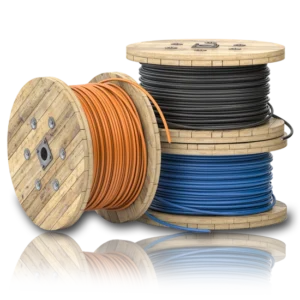
From electric vehicles and aerospace systems to global telecommunications infrastructure and data centers, high-performance wire products must meet extremely tight tolerances while maintaining consistent mechanical and electrical properties.
For manufacturers operating in these industries, precision isn’t optional. It’s essential. Even small deviations in wire tension, layering geometry, or alignment can lead to performance issues in the final application.
At Bartell Machinery Systems, high-precision wire processing systems are engineered to address these challenges directly. Through advanced tension control, precision layering technologies, and innovative mechanical design, Bartell helps manufacturers produce wire products capable of meeting the increasingly demanding requirements of modern infrastructure and advanced technologies.
Understanding the challenges behind high-precision wire manufacturing helps explain why equipment design plays such a critical role in ensuring consistent product quality.
The Rising Demands on Wire Manufacturing
Wire products today must perform in environments that are far more demanding than those of previous generations. Modern applications require wires and cables that can withstand higher electrical loads, increased mechanical stress, extreme environmental conditions, tight dimensional tolerances, and long operational lifecycles.
Several industries are driving these higher performance expectations.
Electric Vehicles:

The rapid growth of electric vehicles has dramatically increased demand for high-performance electrical conductors and cable systems. EV powertrains require reliable wiring capable of handling high currents, thermal loads, and vibration over long operating periods.
Aerospace Systems:
In aerospace environments, weight reduction and reliability are critical. Wire systems used in aircraft and spacecraft must meet stringent safety and performance standards while operating in extreme temperature and pressure conditions.
Telecommunications Infrastructure and data centers:
The expansion of global telecommunications networks, including fiber optic infrastructure and high-capacity data centers, requires cable products that maintain precise construction while supporting massive data transmission demands.
Across all these industries, wire manufacturing processes must deliver consistent quality across large production volumes.
The Complexity Behind Wire Processing
Producing high-performance wire is far more complex than simply drawing metal into thin strands. Advanced wire manufacturing involves a series of tightly controlled processes, including wire drawing and sizing, multi-strand layering, tension management across multiple wires, spooling and take-up operations.
Each stage must operate in synchronization to maintain the desired wire structure and mechanical properties. When multiple wires are combined to form complex cable structures, the challenges multiply. Maintaining precise tension across each strand becomes critical to ensure consistent layering and structural stability.
This is where high-precision processing systems play a decisive role.
Precision Layering: Building Structure into the Wire
One of the defining elements of advanced wire products is layering precision.
Many wire and cable constructions 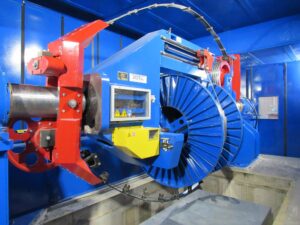 require multiple strands to be arranged in carefully controlled geometries. Whether forming a standard conductor or building reinforced cable layers, the position and orientation of each strand must remain consistent throughout the production run.
Inconsistent layering can lead to several problems:
- Variations in electrical conductivity
- Structural instability within the cable
- Uneven mechanical stress distribution
- Reduced fatigue resistance
Precision layering systems keep each strand accurately positioned relative to the others, maintaining uniform construction from the first meter of product to the last. Bartell’s wire processing systems incorporate carefully engineered mechanical architectures that maintain alignment and stability even during high-speed production.
Tension Control: The Foundation of Wire Quality
If layering defines the structure of a wire product, tension control defines its integrity.
During wire processing, each strand must be maintained at a precisely controlled tension. If tension is too low, strands may shift out of alignment or produce uneven layering. If tension is too high, the wire may deform or experience unnecessary mechanical stress.
Maintaining consistent tension becomes especially challenging when multiple wires are processed simultaneously. Bartell’s systems address this challenge through advanced tension management technologies designed to:
- Monitor wire tension continuously
- Maintain consistent tension across multiple strands
- Compensate for speed variations during production
- Minimize vibration and mechanical disturbances
By stabilizing tension across the entire process, manufacturers can maintain consistent wire geometry and ensure reliable downstream performance.
Managing Mechanical Dynamics at Production Speed
Modern wire processing lines often operate at high speeds to meet production demands. However, increasing speed introduces additional mechanical complexities. Rotating components, wire payoffs, and take-up systems must remain balanced and stable to prevent vibration and alignment issues.
Even minor mechanical instability can lead to wire placement errors, surface damage, irregular winding patterns, and increased machine wear.
Bartell tackles these challenges with robust mechanical design principles that emphasize structural rigidity, balanced rotating assemblies, high-precision bearings and drive systems, and smooth acceleration and deceleration control.
These design features help make sure that high-precision wire products are produced consistently even under demanding production conditions.
Innovations Driving the Next Generation of Wire
As industries continue to push the limits of material performance, wire processing technology must continue to evolve to keep up. Several innovations are shaping the future of high-precision wire manufacturing.
Advanced Process Monitoring
Modern wire processing systems increasingly incorporate sensors and monitoring technologies that track key parameters such as tension, speed, and alignment in real time. These systems allow operators to detect and correct variations quickly, maintaining consistent production quality.
Improved Automation
Automation reduces reliance on manual adjustments and improves repeatability across production runs. Automated systems provide stability in process parameters to maintain uniformity even during long production campaigns.
Adaptive Control Systems
Advanced control software allows machines to dynamically adjust operating parameters as conditions change. This capability is particularly valuable in applications where materials or production speeds may vary. Together, these innovations support more stable production environments and improved product quality.
Supporting Critical Infrastructure
High-precision wire products play a foundational role in modern infrastructure. The reliability of electric vehicle systems, aerospace electronics, and telecommunications networks often depends on the performance of the wire and cable systems that connect them.
Manufacturers in these industries require equipment capable of producing wire products that meet demanding performance standards while maintaining consistent quality across large production volumes.
Bartell’s wire processing systems are engineered with these challenges in mind, combining precision mechanical design with advanced control technologies to support the next generation of high-performance wire manufacturing.
Engineering Precision from the Inside Out
In high-precision wire manufacturing, success is often defined by details that remain invisible to the end user. The quality of individual strands, the stability of tension control systems, and the mechanical precision of processing equipment all contribute to the final product’s performance.
By focusing on precision layering, advanced tension management, and robust machine design, Bartell helps manufacturers meet the evolving demands of industries that rely on high-performance wire systems.
Because in today’s most advanced technologies, from electric vehicles to aerospace systems, the reliability of the entire system often begins with the precision of the wire inside it.